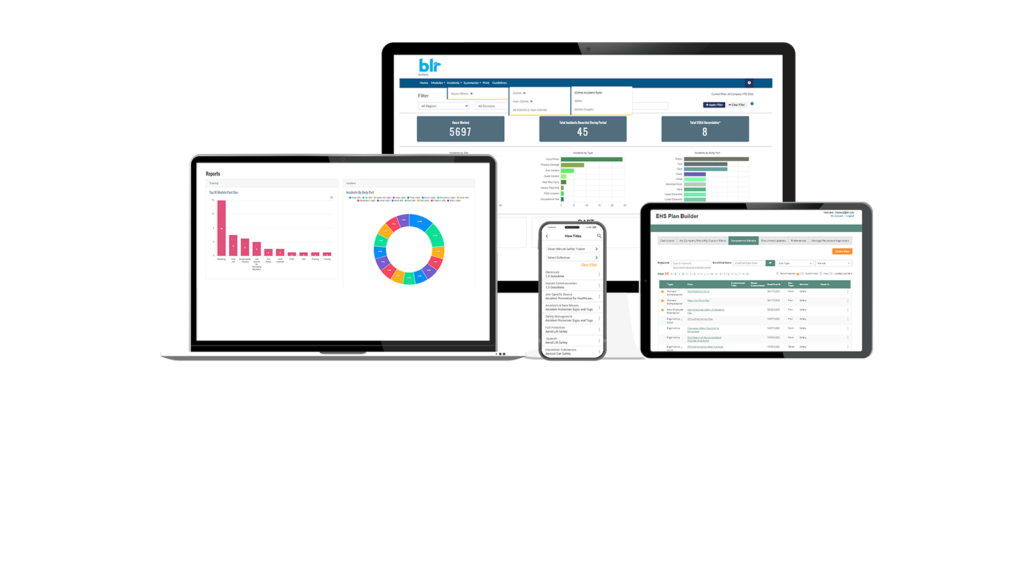
EHS Management
We offer the most comprehensive Environmental, Health, and Safety (EHS) management tools on the market.

Experience enhanced performance and financial growth with our innovative business solutions, designed to ensure consistent training, compliance, and optimized employee workflows.
Companies that maintain a standard of excellence expect the same from their partners. Just as you place a high priority on delivering top-notch services, BLR makes the same commitment of quality to our business relationships.
Our focus is always on our customers. Hear what our valued clients are saying about us.

When you partner with us, you’ll receive industry-leading solutions and unmatched support from our team of experts. For service providers looking for strategic partnerships to train and keep their users and clients in compliance, as well as add value to their offerings, BLR® delivers flexible solutions with powerful administration.
Collaboration goes beyond the sale—unlock the power of our in-house attorneys and analysts, client success, marketing, and technical support teams.